Brand vs. Brand Identity: What Every Small Business Owner Needs to Know
Your brand and your brand identity are not the same thing. Yet most small business owners use these terms interchangeably. They say "We need a rebrand" when they really mean "We need a new logo." Then they hire a designer, get something beautiful, and six months later they're frustrated because nothing actually changed about how people perceive their business. Understanding what brand actually is makes all the difference.
Confusing these two terms costs small business owners time, money, and clients. They're making investments in the wrong things at the wrong time, in the wrong order.
Let's untangle these two terms so you can invest strategically and get actual results.
What "Brand" Actually Means
Your brand is not something you own. It's the perception people have of your business in your absence. It's what someone thinks when they hear your name, how they feel after working with you, what they tell their friends about you. It's the sum of every interaction, every touchpoint, every experience.
You build your brand through how you answer the phone, what your website says and looks like, how you price, what you post on social media, how you follow up after a project, how you handle complaints, what people say in reviews, and how your work actually turns out. None of that is a logo or color palette. But all of it shapes what your brand is. This is the foundation of meaningful brand identity elements that actually resonate.
Think about a brand you know well, like Apple. What makes Apple "Apple"? It's partly the logo, but also the product experience, minimalist design philosophy, premium pricing, retail stores, marketing, and how they talk about innovation. The logo is part of it, but the logo alone isn't the brand.
Your brand is the same. It's the full experience. And here's the thing: you can't control it directly. You can influence it, shape it, and be deliberate about what you put out into the world. But ultimately, your audience owns the perception. They decide what your brand is based on what they experience. A clear strategy helps you influence that perception intentionally.
What "Brand Identity" Actually Means
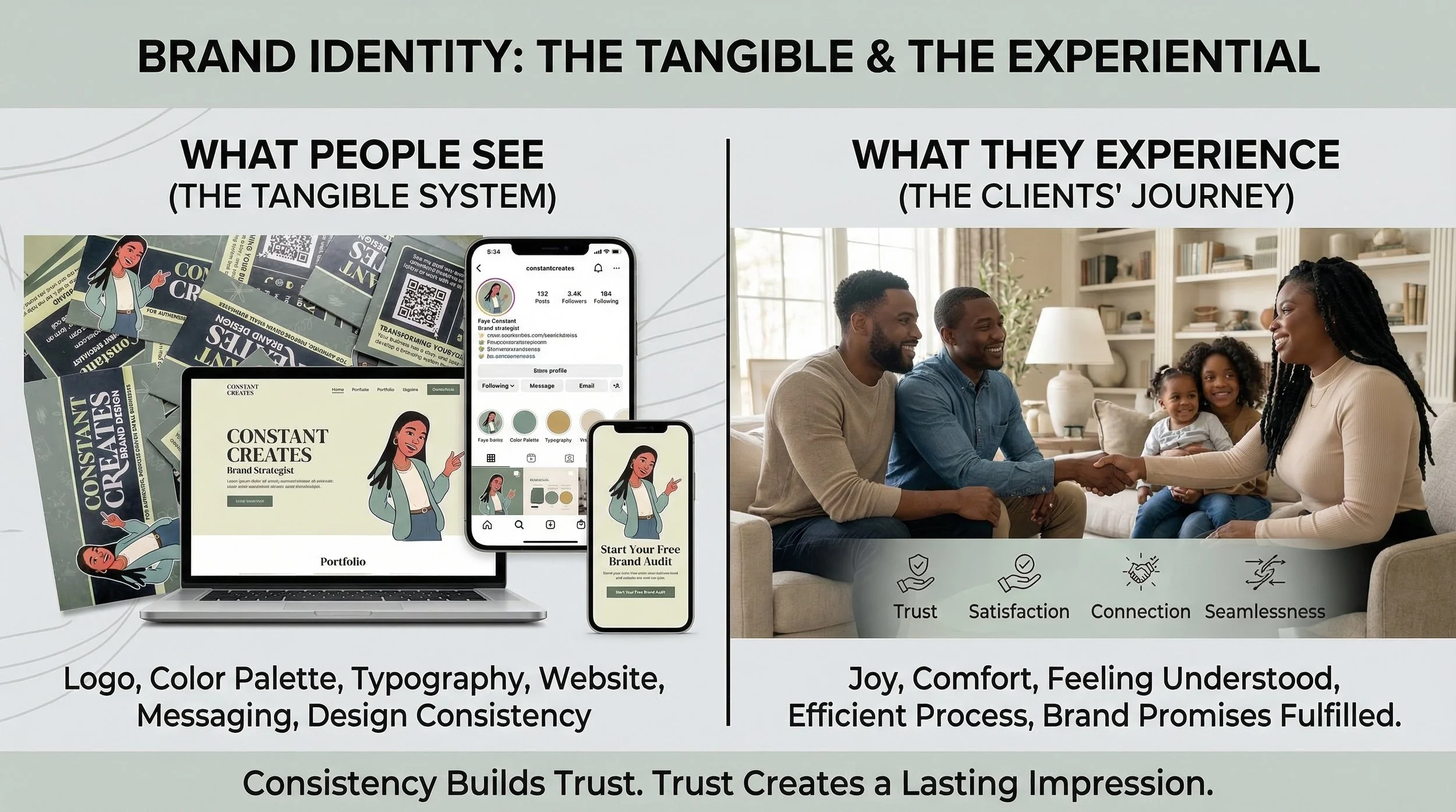
Brand identity is the tangible system you create to communicate your brand. It includes your logo, color palette, typefaces, photography style, tone of voice, and messaging. It's visual and verbal: the consistent look and feel that makes people think "Oh, that's them" when they see your stuff.
A strong brand identity makes your brand recognizable. When someone sees your colors, hears your voice, or spots your logo, they think of you. That consistency builds recognition, and recognition builds trust. Your brand voice is a critical component here, and understanding color psychology reinforces your message.
Brand identity is not the strategy, business model, or positioning. It's the output of those things. It's what comes after you've done the thinking work.
The Relationship Between the Two
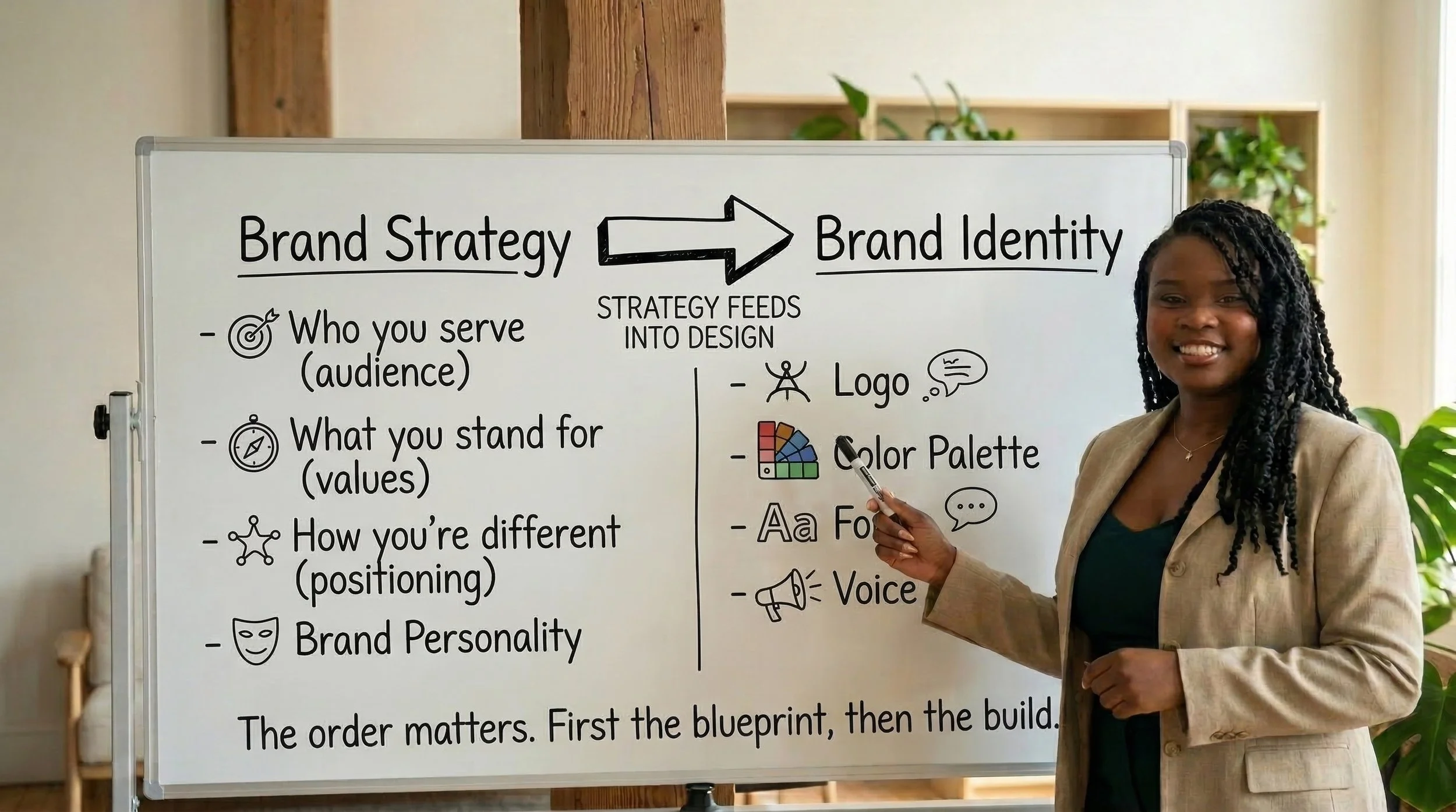
Brand strategy comes first. Brand identity comes second. This is where most small businesses get it backward.
Develop your strategy (who you serve, what you stand for, how you're different) before you touch a single design decision. That strategy becomes the blueprint. Then, brand identity translates that blueprint into visual and verbal form. Your logo should reflect your positioning, your color palette should signal your personality, and your tone of voice should speak directly to your audience. This alignment is central to understanding branding psychology.
Without a strategy, identity is just decoration. You get a beautiful logo that doesn't communicate anything real about your business. You get colors you like, not colors that signal what you stand for.
Without identity, strategy has no voice. You've done all the thinking, but nobody knows it. You're still invisible. This is why visual brand assets matter as much as strategy itself. They need each other. The order matters tremendously.
Why Confusing Them Costs You
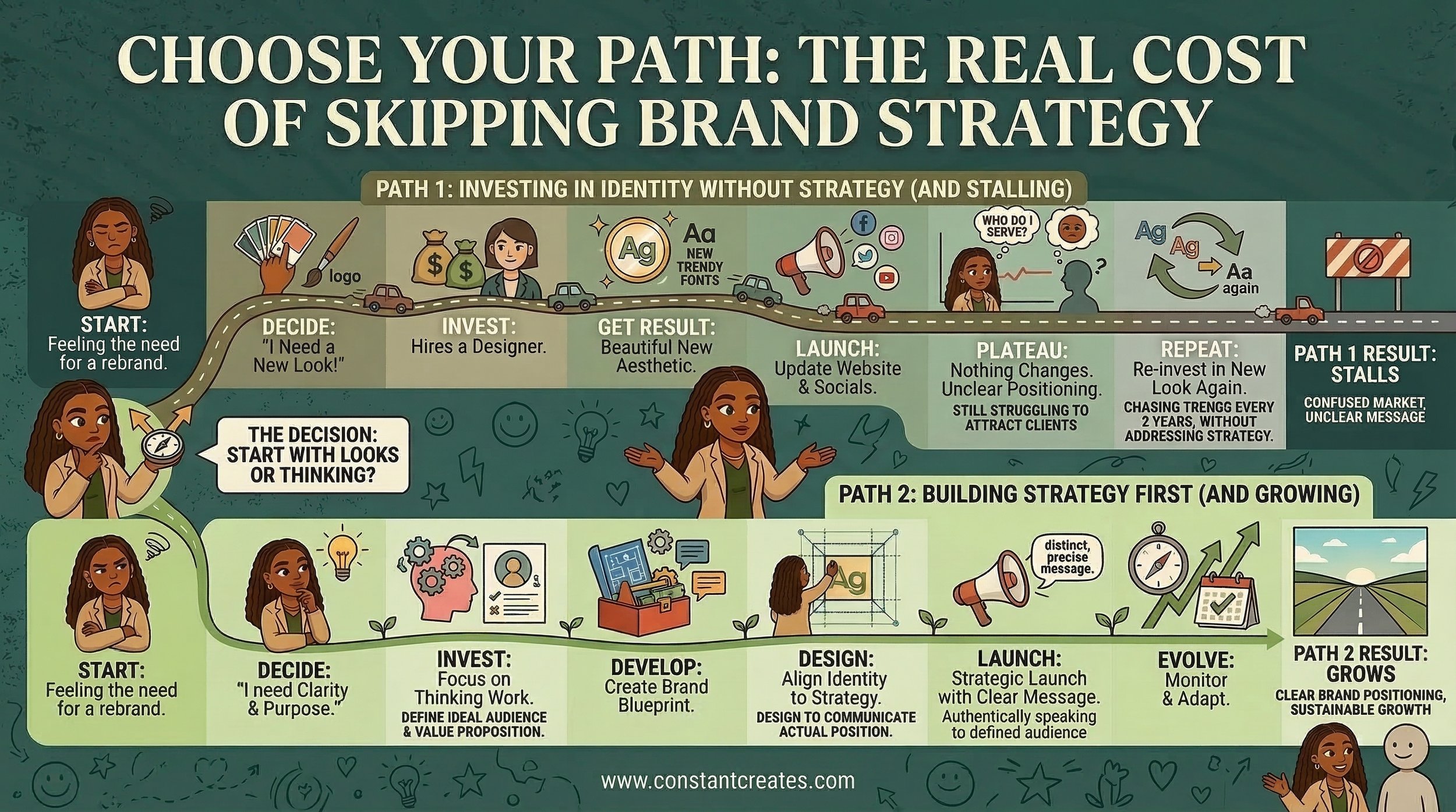
When small business owners confuse these two concepts, they invest in identity without addressing strategy. Someone decides they need a rebrand, thinks "new logo, new colors, new energy," hires a designer, spends thousands, and gets something beautiful. Then nothing changes. They're still struggling to attract clients, still not clear on who they serve, still sounding like everyone else. This is often because they're confusing graphic design with brand design. New colors don't change perception if the underlying positioning is unclear.
Another common pattern: someone gets a beautiful new identity but changes it every two years, chasing trends. New trendy colors, new serif fonts. Their audience gets confused. They don't build recognition or trust. They're constantly starting over. They rebrand the look without addressing strategy. They put the same unclear positioning into a new aesthetic. The problem wasn't the old colors. It was the lack of clarity. This is why brand consistency matters so much. Now they've added a new expense on top of an unsolved problem.
The real cost is working harder than necessary. They make decisions based on what looks cool instead of what communicates their position. When you understand the psychology of branding, you realize that looking good isn't enough—your design must communicate your actual positioning. They invest in things that don't actually help because they're solving the wrong problem. What they really need is the thinking work first: clarity on who they serve and what they stand for.
How to Build Both, in the Right Order
If you're starting from scratch, here's the right sequence.
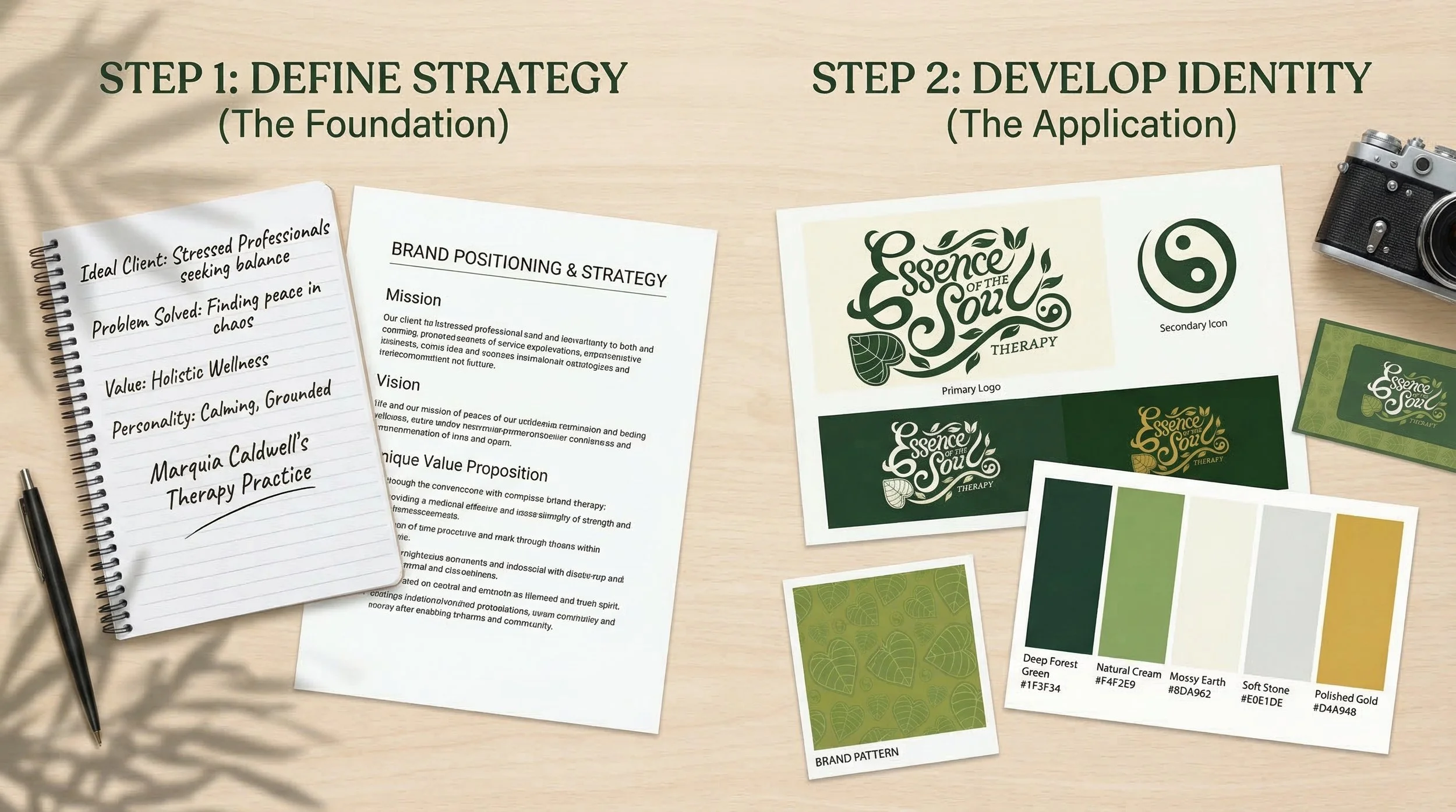
Step 1: Define your brand strategy. Get clear on who you serve, what problem you solve, how you're different from competitors, what you believe about your work, what promise you make to clients, and your personality. Write it down. A brand audit of your existing brand positioning can be a good starting point, or explore how to define your target audience strategically.
Step 2: Develop your brand identity from that foundation. Now that you know your strategy, make design decisions that represent it. Your logo should reflect your positioning, colors should signal your personality, voice should speak to your audience. Every design choice has a reason.
Step 3: Apply consistently across every touchpoint. Your website, social media, email, business cards, presentations, and client communications should all feel like the same brand. Consistency builds recognition and recognition builds trust.
Step 4: Revisit strategy as you grow, update identity accordingly. You don't need to rebrand every year. But check in periodically to assess whether your strategy is still true and your identity still reflects it. Make those decisions strategically, not impulsively.
This process takes time, but it's worth it. When you get it right, your brand identity stops being decoration and becomes a real business asset. It builds recognition, attracts the right clients, makes you easier to refer, and gives you confidence in how you show up.
If you're ready to make sure your identity actually reflects your brand, we'd love to chat.
Start the conversation here and let's see if we're a good fit. Learn more about how branding services can clarify your brand direction.