How to Define Your Target Audience (The Exercise That Changes Everything)
When a potential client asks who you work with, what do you say? If your answer is "small business owners," "people who need marketing help," or "anyone who wants to grow," you're missing the opportunity to build a brand that actually lands.
Here's the paradox: trying to reach everyone means resonating with no one. But being specific doesn't limit your reach. It expands it. Specificity builds authority, makes your marketing easier, attracts the right clients, and repels the wrong ones.
Defining your target audience is the single highest-leverage thing you can do for your brand. It shapes every other decision: your visual identity, messaging, platforms, pricing, and what you talk about. Understanding your audience is foundational to developing a brand strategy.
Let's walk through how to get this right.
Why "Everyone" Is Not a Target Audience
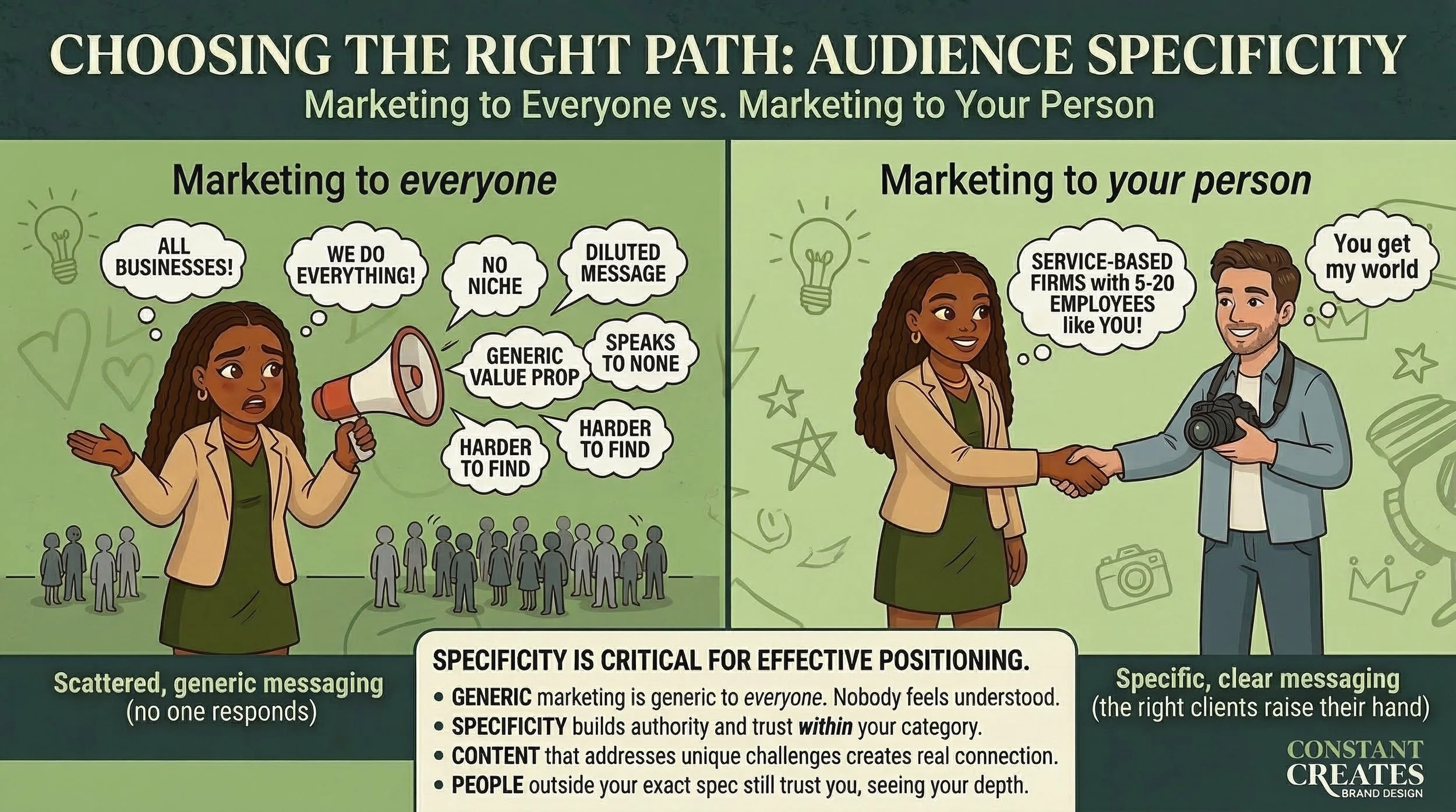
You can't build a meaningful brand for a category. "Small business owners" includes a plumber, therapist, wedding photographer, and software consultant. These people have completely different problems, budgets, decision-making processes, and fears. Trying to speak to all of them means you're speaking to none of them clearly. This is why understanding audience personas is so critical for effective positioning.
A lot of business owners resist getting specific. They worry it'll cost them business. "If I say I work with service-based businesses with 5-20 employees, won't I lose the 4-person shop and the 50-person firm?"
Actually no. When you're specific about your ideal client, you sound credible to everyone in that category. You sound like you understand them, like someone who's worked with people like them and knows their problems. That builds trust with people outside your exact spec. They think "Okay, this person gets my world. I should work with them."
When you try to appeal to everyone, you sound generic to everyone. Nobody thinks "This person really understands my specific situation." This is where brand voice becomes essential to differentiation.
Specificity also makes your marketing more effective. If your target is everyone, how do you create content? What do you talk about? A 50-person SaaS company and a 3-person consulting firm have different challenges. You can't write content that resonates with both. Specificity lets you create content marketing that actually speaks to someone.
Demographics vs. Psychographics
You need both: who they are and why they buy.
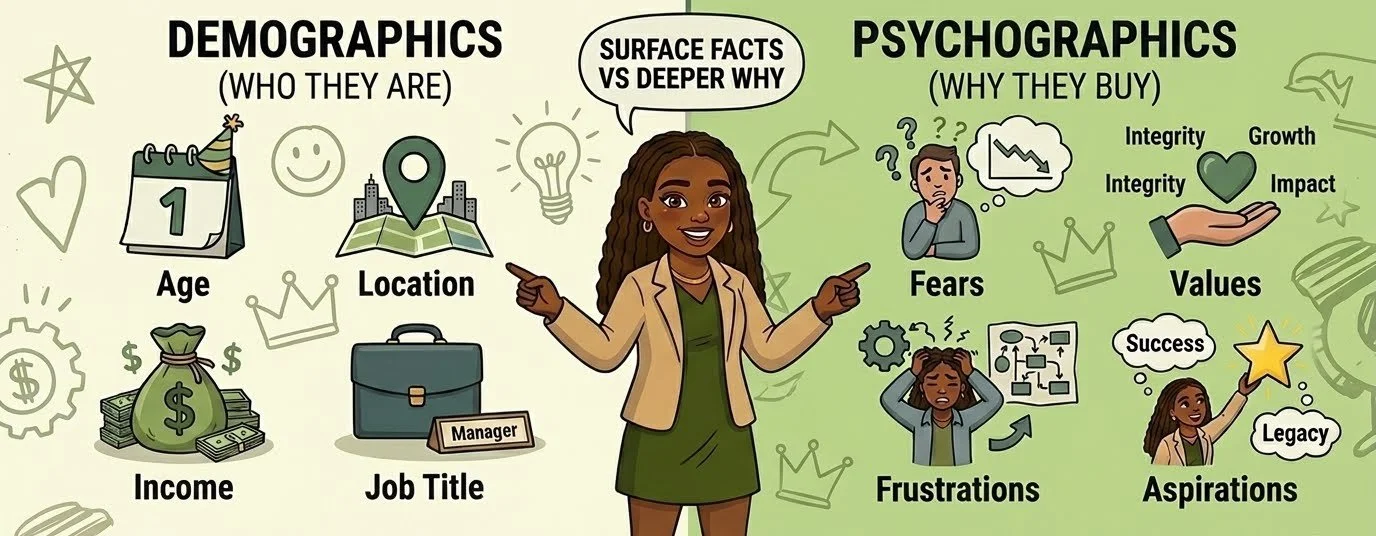
Demographics describe who they are: age, location, income, job title, industry, company size, and education. These are the surface facts.
Psychographics describe why they buy: what they believe, value, what frustrates them, what they fear, what they aspire to, and how they make decisions. Understanding these deeper motivations aligns with branding psychology that drives purchasing decisions. This is what makes brand voice so powerful — it speaks to their values, not just their demographics.
Here's an example. Two business owners might both be 45-year-old women in Sarasota earning $150k a year. Demographically identical. But one is a CPA who values efficiency and is frustrated by technology, while the other is a life coach who values impact and is frustrated by self-doubt. They're different audiences, even though the demographics match. This is why building authentic personas matters more than age and income alone.
The psychographic question that unlocks everything: What keeps them up at night? Not literally, but what frustration, fear, or challenge makes them search for a solution? A financial advisor's ideal client might be kept up by taxes. A marketing strategist's by losing clients to competitors. A therapist's by anxiety.
When you understand what keeps your person up at night, you understand why they'll buy from you.
The Ideal Client Profile Framework
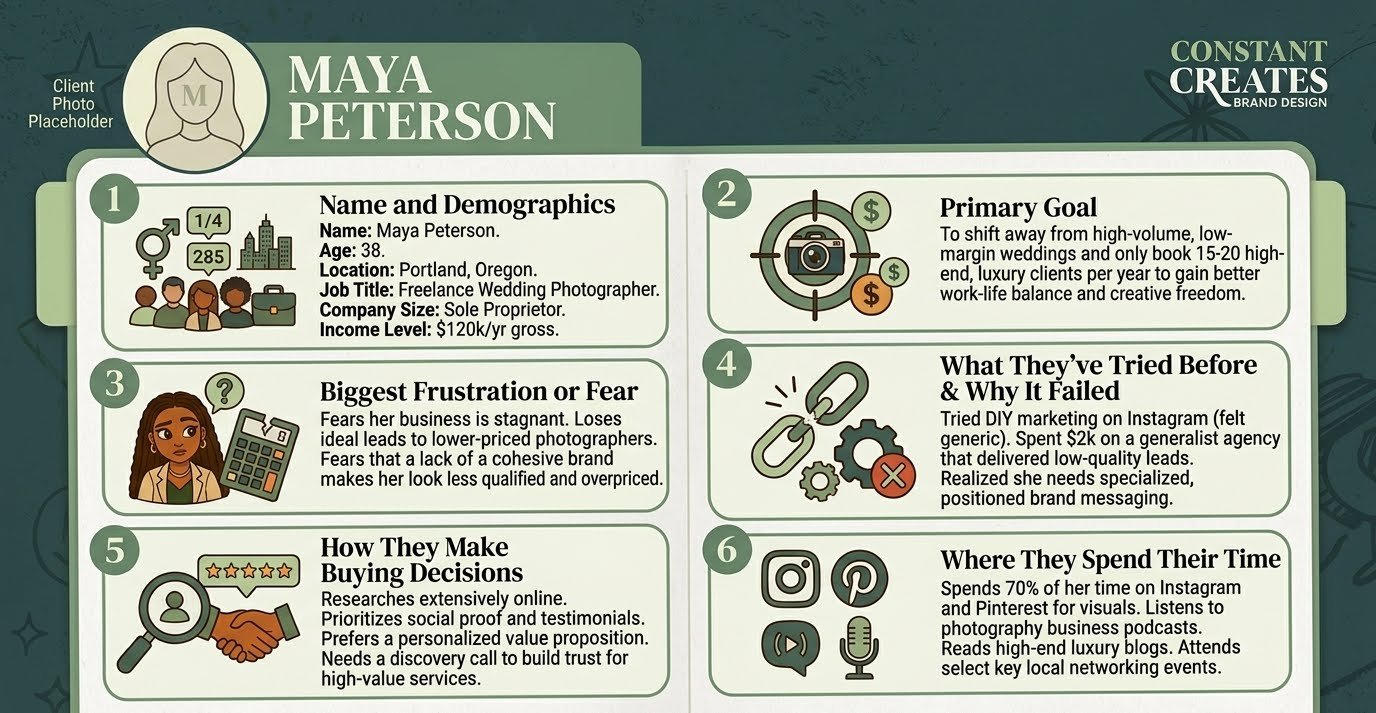
Let's build a real profile. Start here.
Name and demographics. Give your ideal client a name. Add their age, location, job title, company size, and income level.
Their primary goal. What are they trying to accomplish? Be specific. A therapist's client isn't just "wants to feel better," they're "wants to stop having panic attacks so they can be present with their family."
Their biggest frustration or fear. What pain point makes them look for help? A small business owner might fear insufficient marketing knowledge or losing visibility to competitors. A service provider might fear looking overpriced. A professional might fear not being qualified enough. These emotional drivers are the foundation of effective brand messaging and inform your brand strategy.
What they've tried before and why it failed. Most people don't come to you first. What did they try? Why didn't it work? A client might have tried DIY marketing and realized they don't have time. Or tried a generalist agency and felt lost. Understanding what failed tells you what to emphasize. Often, they're looking for someone who specializes in their needs — which is where brand positioning becomes your strongest differentiator.
How they make buying decisions. Do they research extensively? Prefer referrals? Need to try something free first? Need to talk to you before committing? This shapes your sales process and determines whether you need lead magnets or a different approach.
Where they spend their time. What social media platforms do they use? Do they read blogs, listen to podcasts? Are they on LinkedIn, Instagram, or TikTok? Do they network in person? This determines your marketing channels and helps you think about social media strategy strategically.
Build this profile for one person. Not five, not a segment. One person.
How to Research Your Ideal Client (Without Guessing)
Don't guess. Here's how to actually find out.
Look at your best existing clients. Who do you love working with? Who brings you the most energy? Who pays on time, respects your expertise, and gets great results? What do they have in common? Your ideal client probably looks like your best client.
Read reviews of competitors. Go look at Amazon, Google, or Trustpilot reviews of people doing what you do. What do people praise? What do they complain about? That tells you what your ideal client cares about.
Study the language people use. When your ideal client talks about their frustration, what words do they use? Are they on Reddit, Twitter, Facebook groups, or forums discussing their pain point? Read that conversation. That's how they actually think.
Have 2-3 discovery conversations. Reach out to a couple of your best clients or ideal clients you haven't worked with yet. Ask: "What problem were you trying to solve?" "What did you worry might go wrong?" "How did you know you were ready to hire someone?" "What matters most to you in this process?" You'll learn more in one conversation than in months of guessing.
Look at who's already engaging with you. Who comments on your posts? Who attends your webinars? Who opens your emails? That tells you who sees you as relevant.
Turning Your Profile into Brand Decisions
Once your ideal client is clear, everything flows from that.
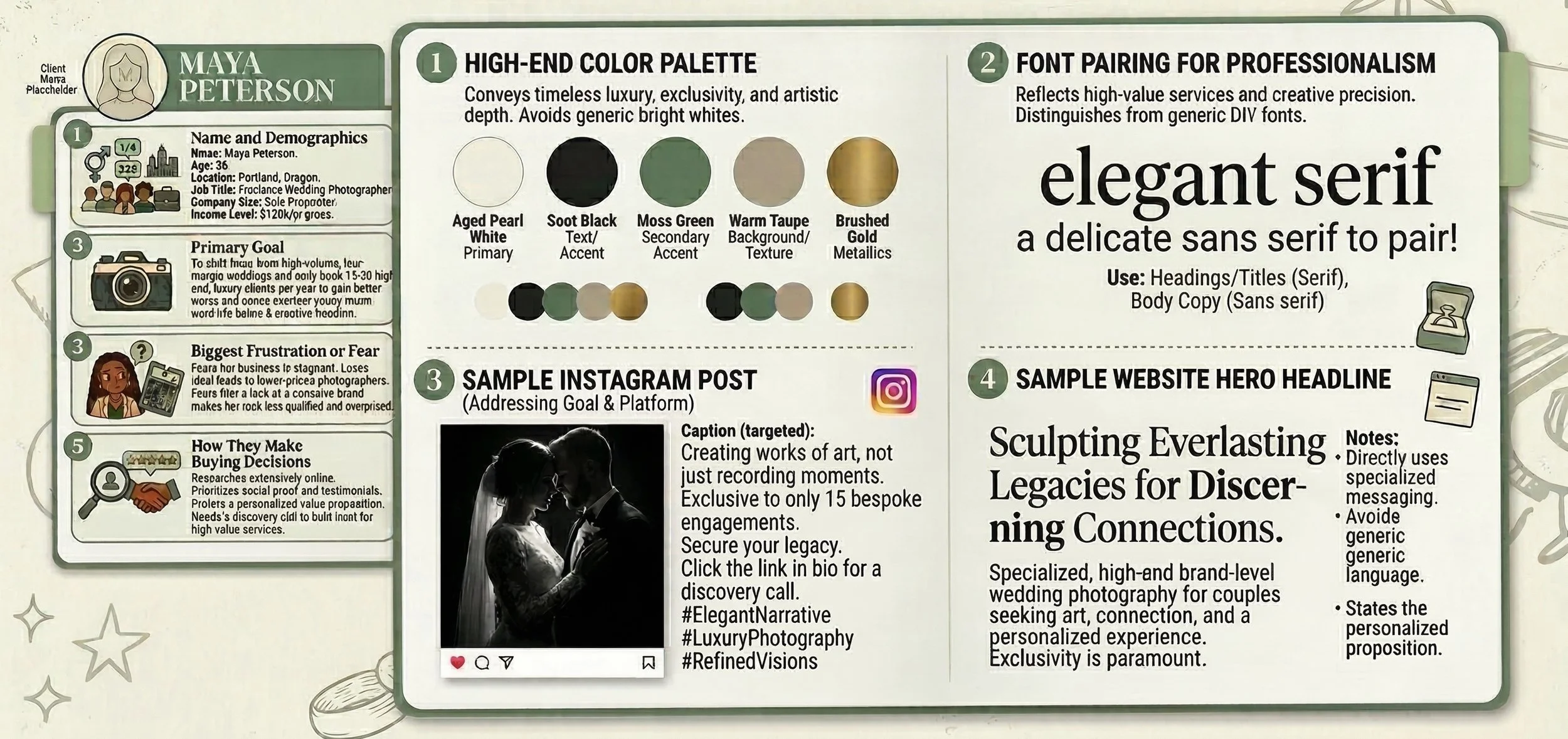
Your visual identity should speak to them. If your ideal client is a CFO who values sophistication and trust, your brand should look formal and polished. If they're a young, creative entrepreneur, your brand should feel fresh and energetic. The colors, typography, and imagery style all reflect the person you're talking to. This is where color psychology informs your visual brand assets.
Your messaging should address their specific frustrations, not generic problems. Use language they actually use. Talk about benefits that matter to them, not features that don't mean anything.
Your content should answer their questions, address their challenges, and help them learn what they need to know. Strategic content marketing ensures you're speaking directly to their needs.
Your channels should go where they actually are. If your ideal client reads email first thing in the morning but rarely uses Instagram, focus on email and LinkedIn. Don't waste energy on TikTok trying to reach people who aren't there. Understanding attraction marketing helps you reach them where they're already looking for solutions.
If your brand and messaging could apply to anyone, it's probably not resonating with anyone. Generic doesn't stick.
Getting Started
Spend 30 minutes building out your ideal client profile using the framework above. Be specific. Give them a name. Make them real.
Then walk through your current brand and messaging. Does it speak directly to that person? Or does it sound like it could apply to anyone? If it's the latter, that's where your brand strategy starts. You can also grab our free Brand Audit Checklist to do a full review.
Getting clear on your audience isn't a one-time exercise. As your business grows, your ideal client might shift. But having one person in mind is always more powerful than trying to reach everyone. With a clear ideal client, everything from your visual brand identity to your website design becomes more intentional and effective.
If you're not sure who your ideal client is, or you know it intuitively but can't articulate it clearly, we can help. That's where every strong brand starts. Start the conversation here, and let's see if we're a good fit.